

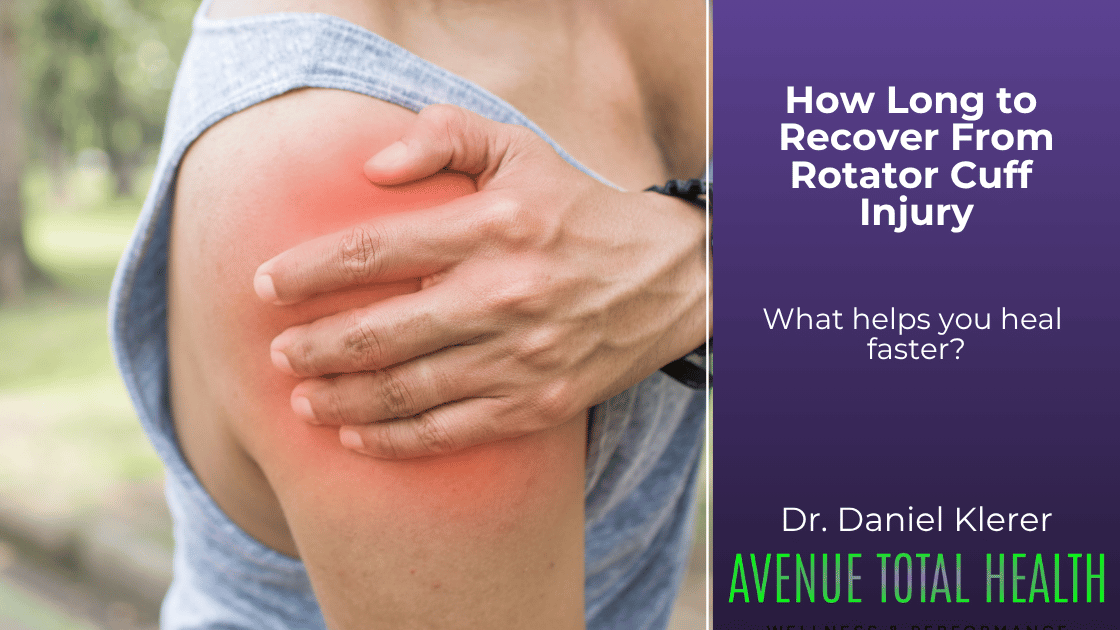
Shoulder pain can be frustrating, especially when simple movements like reaching overhead, sleeping on your side, or lifting weights suddenly become painful. One of the most common causes is a rotator cuff injury.
A question I hear almost daily in clinic is:
“How long will this take to heal?”
The honest answer: it depends on the type of injury — but most people improve faster than they expect when treatment is done correctly.
Let’s break it down.
Types of Rotator Cuff Injuries (and Recovery Time)
1. Rotator Cuff Tendinitis / Irritation
Why Some Rotator Cuff Injuries Don’t Heal Quickly
What Actually Helps You Recover Faster
When Should You Seek Professional Help?
What Is the Rotator Cuff?
The rotator cuff is a group of four muscles that stabilize and move your shoulder:
- Supraspinatus
- Infraspinatus
- Teres minor
- Subscapularis
These muscles keep the ball of the shoulder centered in the socket while your larger muscles generate power.
When they become irritated, overloaded, or torn, pain and weakness develop.
Types of Rotator Cuff Injuries (and Recovery Time)
Recovery timelines vary mainly based on tissue damage and irritability, not just pain level.
1. Rotator Cuff Tendinitis / Irritation
What it is:
Inflammation or overload without structural tearing.
Common causes
- Sudden increase in activity
- Overhead sports
- Gym overload
- Poor shoulder mechanics
Typical recovery time:
2–6 weeks
With proper rehab, many people notice improvement within the first 2–3 weeks.
2. Rotator Cuff Tendinopathy
What it is:
Degenerative tendon overload from repeated stress over time.
Symptoms
- Achy shoulder pain
- Weakness lifting sideways
- Pain sleeping on affected side
Typical recovery time:
6–12 weeks
Tendons adapt slowly, so consistent loading is key.
3. Partial Rotator Cuff Tear
What it is:
Some tendon fibers are damaged but not fully torn.
Typical recovery time:
8–16 weeks (non-surgical)
Most partial tears improve without surgery when strength and shoulder mechanics are restored.
4. Full Thickness Tear
What it is:
Complete tendon rupture.
Recovery timeline:
- Non-surgical management: 3–6 months functional recovery
- Post-surgical rehab: 4–9 months
Many people — especially non-overhead athletes — function very well without surgery.
Why Some Rotator Cuff Injuries Don’t Heal Quickly
Pain often persists not because the tissue is severely damaged, but because of poor shoulder mechanics.
Common contributing factors include:
- Weak rotator cuff activation
- Poor scapular control
- Thoracic spine stiffness
- Forward shoulder posture
- Overactive upper traps
- Reduced hip/core contribution during movement
The shoulder is heavily dependent on the rest of the kinetic chain.
What Actually Helps You Recover Faster
1. Keep Moving (But Smartly)
Complete rest usually slows recovery.
Instead:
- Modify painful movements
- Stay within tolerable ranges
- Gradually reload the tendon
Motion improves circulation and tissue adaptation.
2. Progressive Strengthening
Rehab should progress through stages:
Phase 1 — Pain Reduction
- Isometric external rotations
- Supported arm movements
- Scapular setting exercises
Phase 2 — Control
- Side-lying external rotation
- Serratus anterior activation
- Closed-chain stability work
Phase 3 — Strength
- Resistance band work
- Dumbbell loading
- Eccentric training
Phase 4 — Return to Sport/Gym
- Overhead loading
- Plyometrics
- Functional movement patterns
Skipping stages is a major reason symptoms return.
3. Improve Shoulder Mechanics
Treatment should address more than the shoulder itself:
- Thoracic spine mobility
- Rib cage movement
- Scapular positioning
- Rotational core strength
- Hip stability
This reduces overload on the rotator cuff.
4. Manual Therapy Can Help
Sports chiropractic treatment may include:
- Joint mobilizations
- Soft tissue therapy
- Myofascial release
- Movement retraining
These help reduce pain so exercises become more effective.
5. Load Management Matters
A common mistake:
Too much too soon → flare-up → rest completely → repeat cycle
Instead:
- Increase activity gradually (10–15% rule)
- Avoid sharp pain during exercise
- Expect mild soreness but not worsening symptoms
Signs You’re Recovering Well
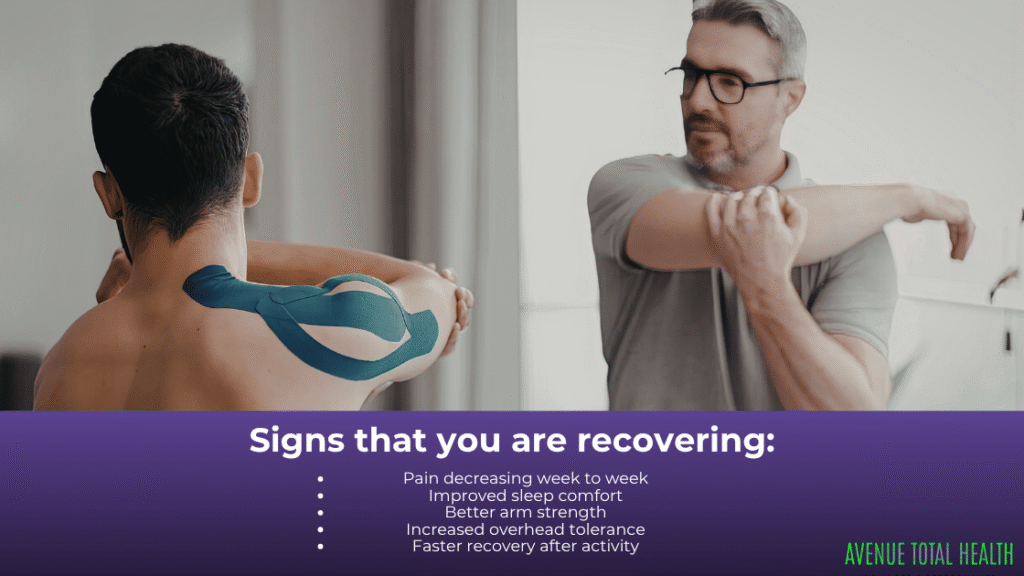
Good progress looks like:
- Pain decreasing week to week
- Improved sleep comfort
- Better arm strength
- Increased overhead tolerance
- Faster recovery after activity
Healing is rarely linear — small setbacks are normal.
When Should You Seek Professional Help?
Consider assessment if:
- Pain lasts longer than 2–3 weeks
- Night pain is severe
- Weakness persists
- You cannot lift your arm overhead
- Injury followed trauma or a fall
Early treatment often shortens recovery dramatically.
