

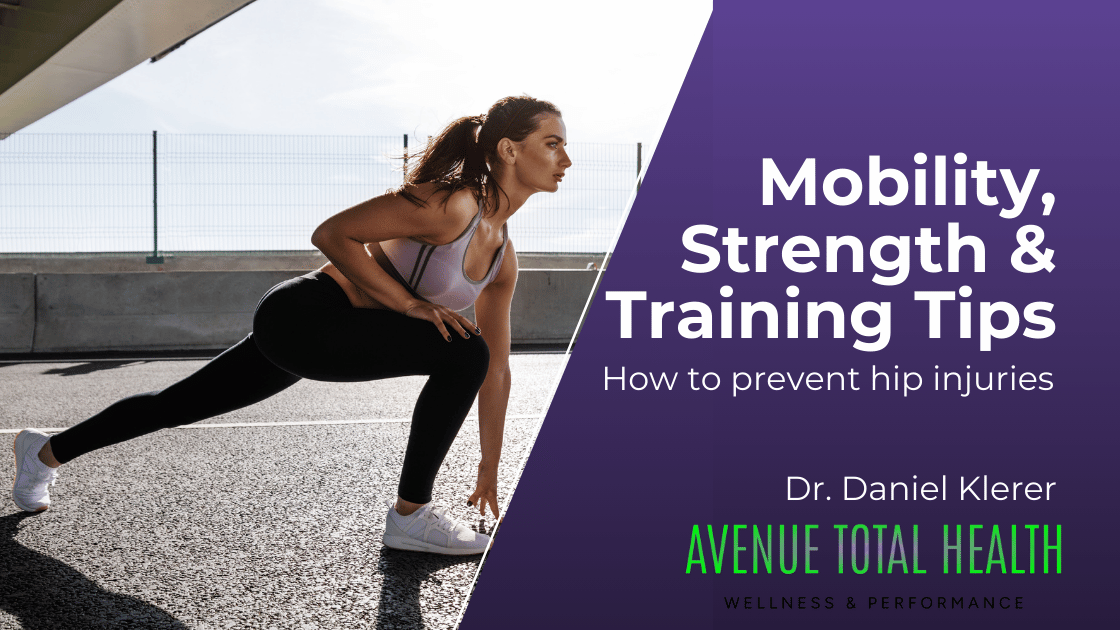
The hips are one of the most important—and often overlooked—areas of the body when it comes to injury prevention. They connect the upper and lower body, generate power, stabilize movement, and absorb large amounts of force with daily activities and athletic performance. When the hips don’t move or function well, the risk of pain and injury increases not only in the hips themselves, but also in the knees and lower back.
We’ve covered how long it takes for hip injuries to recover. The good news? Many hip injuries are preventable with proper movement habits, strength, and recovery strategies. Below, we’ll review the most common hip injuries seen in the clinic and outline practical ways to keep hips healthy for everyone—from older adults to high-performance athletes.
⸻
Common Hip Injuries Seen in the Clinic
Some of the most frequent hip-related issues I see include:
• Hip flexor strains and tightness
• Gluteal and adductor muscle strains
• Hip and glute tendinopathy
• Greater trochanteric bursitis
• Labral irritation or tears
• Femoroacetabular impingement (FAI)
• Referred pain from the low back or pelvis
Many of these injuries don’t happen from one single event. Instead, they develop over time due to poor movement mechanics, muscle imbalances, limited mobility, or lack of proper warm-up and recovery.
⸻
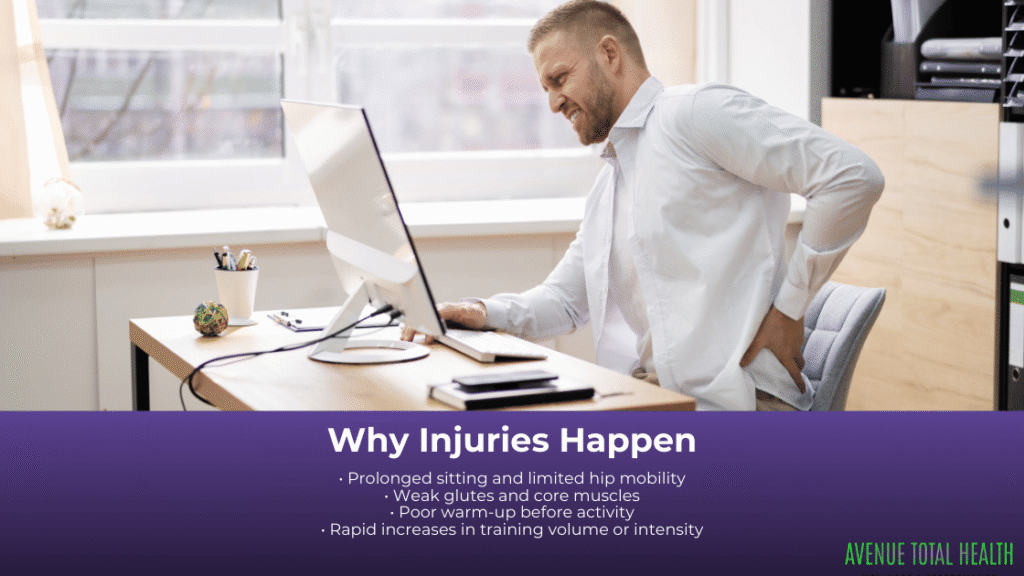
Why Hip Injuries Happen
Hip injuries often occur when the joint is asked to handle forces it’s not prepared for. Common contributing factors include:
• Prolonged sitting and limited hip mobility
• Weak glutes and core muscles
• Poor warm-up before activity
• Rapid increases in training volume or intensity
• Repetitive movements without adequate recovery
• Poor balance or stability, especially in older adults
Addressing these factors early is key to long-term hip health.
⸻
General Principles for Preventing Hip Injuries
Regardless of age or activity level, a few core principles apply to everyone:
• Maintain hip mobility in all directions
• Strengthen the glutes, hips, and core
• Warm up before activity and cool down after
• Progress activity gradually
• Address pain or stiffness early, before it becomes chronic
⸻
Hip Injury Prevention for Older Adults
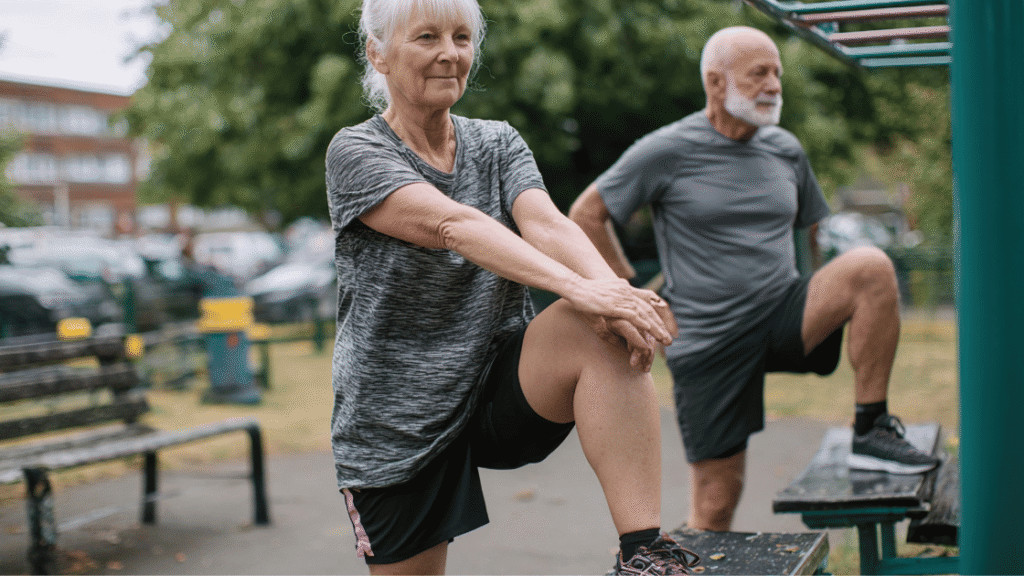
As we age, maintaining hip health becomes critical for balance, walking ability, and independence. Falls and degenerative joint issues often stem from weak or stiff hips.
Recommended Strategies
Low-impact movement
• Walking
• Swimming
• Cycling
Mobility exercises
• Seated or standing hip circles
• Gentle hip flexor stretches
• Figure-4 stretch (seated or lying down)
Strength and stability
• Chair squats
• Standing hip abduction with support
• Glute bridges
Balance work
• Single-leg stands (with support as needed)
• Heel-to-toe walking
Consistency matters more than intensity for this group. Small, daily efforts go a long way in preventing hip pain and falls.
⸻
Hip Injury Prevention for Recreational Exercisers
For gym-goers and recreational athletes, hip injuries often occur due to poor warm-ups, muscle imbalances, or pushing through pain.
Warm-Up Recommendations
A proper warm-up should raise body temperature and prepare the hips for movement:
• Light cardio (5–10 minutes)
• Leg swings (front-to-back and side-to-side)
• Walking lunges
• Bodyweight squats
Mobility and Stretching
• Hip flexor stretch
• Adductor (groin) stretch
• Glute stretch or pigeon stretch
• 90/90 hip rotation drills
Stretching should focus on areas that feel tight while maintaining strength in the full range of motion.
Strength Work
• Deadlifts and hip hinges
• Squats (bodyweight to loaded)
• Step-ups
• Lateral band walks
Strong hips are resilient hips.

⸻
Hip Injury Prevention for High-Performance Athletes
High-performance athletes place enormous demands on their hips. Injury prevention at this level requires intentional programming and recovery.
Dynamic Warm-Ups
• High knees
• A-skips and B-skips
• Lateral shuffles
• Bounding drills
Strength and Power Training
• Loaded squats and split squats
• Single-leg Romanian deadlifts
• Olympic lift variations
• Plyometrics (when appropriate)
Mobility Maintenance
• Active stretching rather than long static holds pre-training
• Foam rolling for glutes, quads, and adductors
• Hip CARs (controlled articular rotations)
Recovery Strategies
• Proper sleep and nutrition
• Scheduled deload weeks
• Manual therapy and soft tissue work
• Addressing asymmetries early
At this level, injury prevention isn’t just about avoiding pain—it’s about optimizing performance and longevity.
⸻
When to Seek Professional Care
Even with the best prevention strategies, issues can still arise. Early evaluation is important if you notice:
• Persistent hip pain
• Loss of range of motion
• Pain during squats, running, or stairs
• Pain that radiates to the groin, thigh, or low back
Hands-on care, movement assessment, and individualized rehab can help correct small issues before they turn into long-term injuries.
⸻
Final Thoughts
Hip injury prevention is about staying proactive, not reactive. Whether you’re an older adult focused on staying active, a weekend warrior in the gym, or a competitive athlete pushing performance limits, healthy hips are essential.
By prioritizing mobility, strength, proper warm-ups, and recovery, you can significantly reduce your risk of hip injuries and keep moving confidently for years to come.
If you’re unsure where to start—or if something doesn’t feel right—booking professional assessment can make all the difference.
Follow @dr.daniel.klerer on Instagram for more information on Physiotherapy in Toronto!
