

Hip injuries are common in active individuals, athletes, and gym-goers alike. Because the hip joint plays a major role in nearly every lower-body movement—walking, squatting, running, lifting—injuries in this area can significantly impact performance and daily life. One of the most common questions I hear in the clinic is: “How long is this going to take to heal?”
The short answer is: it depends. Recovery time varies based on the type of injury, its severity, how early it’s treated, and how consistently rehab is followed. Below, we’ll break down common hip injuries, typical recovery timelines, and how treatment strategies differ between injuries that heal quickly and those that take longer.
⸻
Common Types of Hip Injuries
Some of the most frequently seen hip injuries include:
- Muscle strains (hip flexors, glutes, adductors)
- Tendon issues (tendinopathy of the hip flexors or gluteal tendons)
- Labral tears
- Bursitis (especially greater trochanteric bursitis)
- Femoroacetabular impingement (FAI)
- Low-back or pelvic dysfunction, referring pain to the hip
Each of these injuries affects different tissues and therefore heals at different rates.
⸻
Hip Injuries With the Least Recovery Time
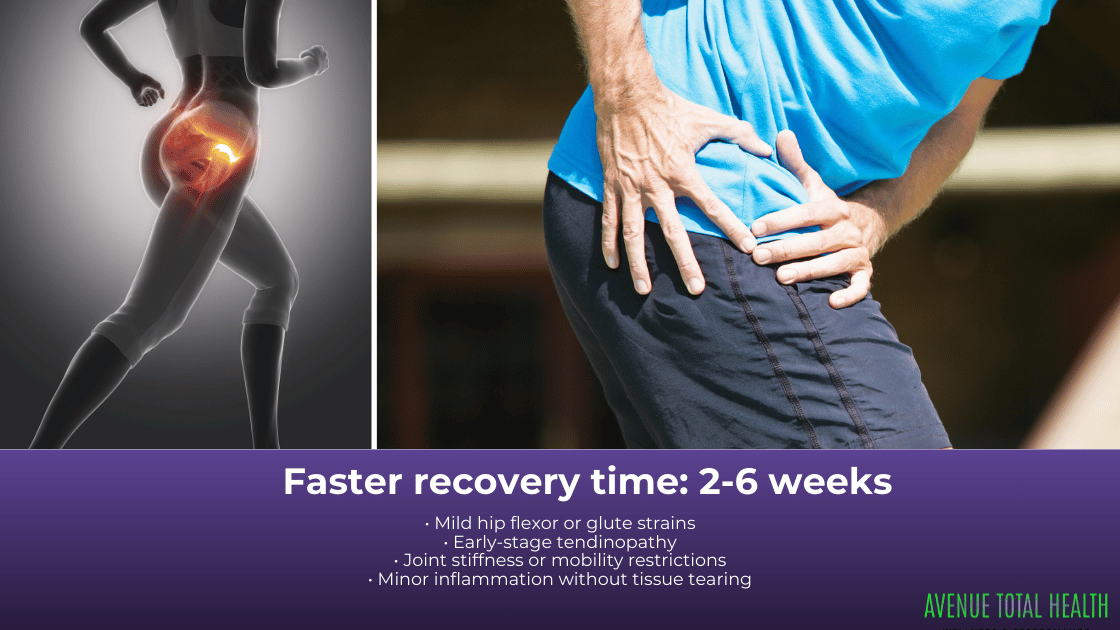
Typical Recovery: 2–6 Weeks
Milder hip injuries generally involve muscle strains, minor tendon irritation, or joint dysfunction without structural damage. These injuries often occur from overuse, sudden increases in training volume, or poor movement mechanics.
Examples include:
- Mild hip flexor or glute strains
- Early-stage tendinopathy
- Joint stiffness or mobility restrictions
- Minor inflammation without tissue tearing
When addressed early, these injuries often respond very well to conservative care.
Treatment Approach for Faster-Healing Injuries
For injuries with shorter recovery timelines, the goal is to reduce pain, restore movement, and maintain strength without overloading healing tissue.
Common treatments I use include:
- Acupuncture with electrical stimulation: Helps decrease pain, improve blood flow, and stimulate healing in affected muscles and tendons.
- Soft tissue work: Targeted treatment to tight or overactive muscles to improve mobility and reduce compensatory patterns.
- Joint mobilization and adjustments: Restoring proper hip and pelvic mechanics can significantly reduce stress on irritated tissues.
- Rehab exercises: Focused on restoring range of motion, activating stabilizing muscles, and gradually returning to full activity.
With proper treatment and activity modification, many patients feel significant improvement within a few weeks and return to training safely.
⸻
Hip Injuries With the Most Recovery Time
Typical Recovery: 3–6+ Months
More complex hip injuries involve structural damage, chronic tissue changes, or long-standing movement dysfunction. These injuries often develop over time and may have been present well before symptoms became severe.
Examples include:
- Labral tears
- Moderate to severe tendinopathy
- Femoroacetabular impingement (FAI)
- Chronic bursitis
- Post-surgical hip rehab
These conditions require a more patient, structured approach to avoid setbacks.
Treatment Approach for Longer-Healing Injuries
For injuries with longer recovery timelines, treatment focuses on tissue healing, load management, and correcting underlying movement issues.
Common treatments include:
- Acupuncture with stimulation: Used to manage pain, reduce inflammation, and improve neuromuscular control over time.
- Advanced soft tissue techniques: Addressing chronic adhesions, scar tissue, and compensatory muscle tension.
- Progressive rehab programs: Strengthening the hip, glutes, and core while gradually reintroducing load.
- Movement retraining: Correcting faulty squat, hinge, and running mechanics to prevent re-injury.
- Activity modification: Temporarily adjusting training volume and intensity to allow healing without deconditioning.
Consistency is key with these injuries. While progress may feel slower, structured care often leads to long-term improvements and reduced risk of recurrence.
⸻
What Impacts Recovery Time?
Several factors influence how long a hip injury takes to heal:
- Severity of the injury
- How long the injury was present before treatment
- Training load and recovery habits
- Sleep, nutrition, and stress levels
- Adherence to rehab recommendations
Early intervention almost always leads to faster and more complete recovery.
⸻
Final Thoughts
Hip injuries don’t have a one-size-fits-all timeline. Some resolve in a matter of weeks, while others require months of consistent care and rehab. The good news is that most hip injuries respond extremely well to conservative treatment when properly assessed and managed.
If you’re dealing with hip pain—whether it’s new or something you’ve been pushing through—it’s worth getting it evaluated sooner rather than later. The right combination of hands-on care, acupuncture with stimulation, and individualized rehab can make all the difference in how quickly and confidently you get back to moving well. Our clinic is located at the corner of Avenue Road in North York—visit our office to have your hip injury assessed and start moving forward with a clear recovery plan.
Follow Dr. Klerer for more on Instagram!
